

UAE unveils AI framework to transform 50 government sectors in 2 years
Agentic systems to reshape federal services with autonomous decision-making capabilities

DUBAI – The United Arab Emirates (UAE) has announced a sweeping government transformation framework aimed at deploying Agentic Artificial Intelligence across half of all federal sectors within two years.
The initiative, unveiled under the directives of UAE President His Highness Sheikh Mohamed bin Zayed Al Nahyan and announced by His Highness Sheikh Mohammed bin Rashid Al Maktoum, marks a significant shift from digital transformation towards autonomous, intelligence-driven governance.
The framework positions AI not only as a support tool but as an operational and decision-making partner within government systems. It also sets out a structured national approach to redesigning services, policies, and procedures in line with advanced AI capabilities.

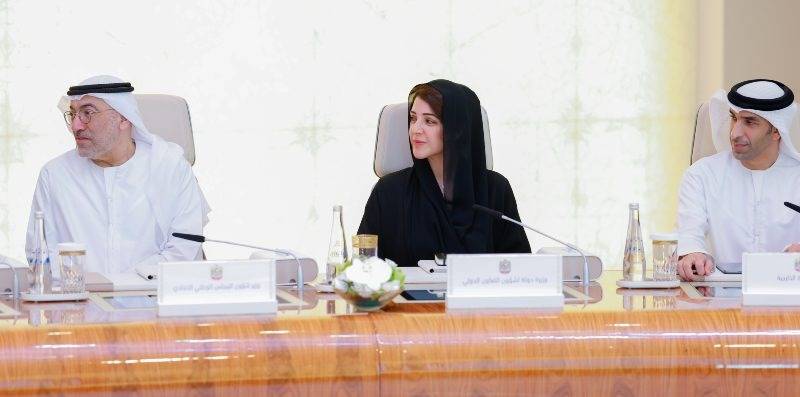
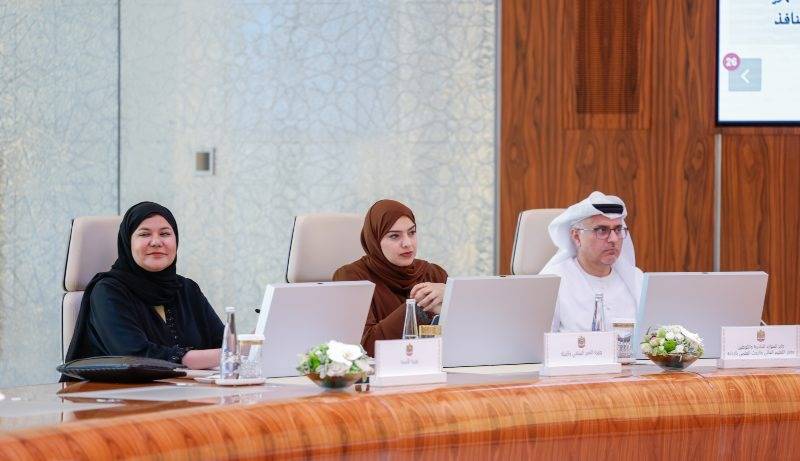
The announcement was made during a UAE Cabinet meeting chaired by His Highness Sheikh Mohammed bin Rashid, Vice President, Prime Minister and Ruler of Dubai, attended by senior leaders including Sheikh Mansour bin Zayed Al Nahyan, His Highness Sheikh Hamdan bin Mohammed bin Rashid Al Maktoum, Sheikh Maktoum bin Mohammed bin Rashid Al Maktoum, and Sheikh Abdullah bin Zayed Al Nahyan. The gathering underlined the coordinated federal approach to the transformation agenda, which will be implemented across ministries and federal entities under unified direction.
AI shift
At the core of the framework is the deployment of Agentic AI systems capable of performing tasks autonomously, including monitoring changes, analysing data, generating recommendations, managing operations, and executing actions without continuous human intervention. According to His Highness Sheikh Mohammed bin Rashid Al Maktoum, these systems will operate as an “executive partner” to government decision-making structures, enhancing efficiency, accelerating service delivery, and enabling real-time evaluation of outcomes.
The UAE government stated that the aim is to transform 50% of government sectors, services, and operational processes within two years. This includes embedding AI into policy design, administrative workflows, and public service delivery systems. The shift represents an evolution beyond earlier phases of eGovernment, mobile government, and integrated digital platforms, towards fully autonomous service ecosystems.
The framework builds on two decades of digital transformation in the UAE, including initiatives such as UAE Pass for digital identity, Government Services 2.0 for proactive service delivery, and unified digital infrastructure across federal entities. The new approach introduces a deeper integration of AI into governance structures, where systems are expected to proactively execute tasks and continuously optimise performance.
Cabinet meeting
During the Cabinet session, His Highness Sheikh Mohammed bin Rashid Al Maktoum emphasised that the transformation will be implemented under strict timelines of two years, with performance assessments for ministers, directors general, and federal entities based on their ability to adopt AI-driven systems. Evaluation criteria will include speed of implementation, understanding of technological advancements, and the ability to integrate AI into new operational models.
He further stated that the UAE will become the first government globally to deploy Agentic AI at such scale across public sector operations. The Cabinet meeting also approved the formation of a dedicated taskforce to oversee execution, chaired by Mohammad Abdullah Al Gergawi, Minister of Cabinet Affairs, and supervised by Sheikh Mansour bin Zayed Al Nahyan.
The leadership reiterated that despite rapid technological change, the central principle remains focused on people. The objective is to improve quality of life, enhance government responsiveness, and create more efficient service structures. The framework is designed to ensure that technological deployment translates into measurable public benefit rather than isolated digital upgrades.
Implementation plan
The implementation strategy will follow a phased rollout across federal ministries and entities, with continuous assessment of impact and performance. Each phase will be evaluated to determine readiness for wider deployment, ensuring that systems are tested, refined, and scaled based on results.
The framework includes redesigning government processes to align with AI capabilities, enabling systems to perform predictive analysis, automate decision pathways, and manage service delivery workflows. This is expected to reduce operational costs, improve productivity, and significantly enhance the speed and accuracy of public services.
A key element of the plan is the integration of national digital infrastructure with AI systems, ensuring interoperability across sectors. The approach also includes avoiding duplication of services and promoting reuse of existing digital capabilities such as identity verification systems, digital wallets, and unified service platforms.
The Cabinet also approved related governance frameworks, including the UAE Code for Government Services and the Zero Bureaucracy programme, which aim to simplify procedures, standardise service delivery, and improve customer experience across federal entities. These measures are intended to support the broader AI transformation by ensuring that administrative structures are streamlined and compatible with autonomous systems.
Focus on training
A central pillar of the framework is human capital development. The UAE government has committed to training all federal employees in advanced AI tools and applications through continuous specialised programmes. The objective is to ensure that government staff are actively integrated into the transformation rather than replaced by it.

His Highness Sheikh Mohammed bin Rashid Al Maktoum emphasised that government employees will be empowered to become among the world’s leading experts in AI-driven governance systems. Training will focus on generative AI, agentic systems, data-driven decision-making, and operational automation.
The initiative also establishes performance-linked expectations for leadership roles, ensuring that adoption of AI technologies is reflected in institutional evaluation. This creates a governance model where capability development and technological adoption are directly tied to organisational performance.
The broader intention is to build a workforce capable of designing, managing, and refining AI-powered government systems, ensuring long-term sustainability of the transformation agenda.
Digital governance
The Cabinet approved a series of complementary policies aimed at strengthening digital governance structures alongside the AI framework. These include the Government Services Digital Records Policy, which establishes digital records as the official source of government data, ensuring transparency, consistency, and data quality across entities.
A Government Services Data Sharing Policy was also approved, based on the principle of “collect once, use securely across entities”. This policy introduces governance mechanisms for data exchange between federal, local, and private sector entities while maintaining strict privacy and security standards.
In addition, a Federal Government Guide for aligning digital projects with national priorities was endorsed. The guide promotes efficient resource allocation, reuse of digital infrastructure, and improved project governance through feasibility studies and pilot-based implementation models.
Together, these measures are designed to support the AI transformation by ensuring that data ecosystems are unified, reliable, and accessible for intelligent systems operating across government functions.
Global positioning
The UAE Cabinet also approved a range of initiatives aimed at strengthening international competitiveness and global cooperation. These include frameworks for geographical indication protection of national products and a unified digital postal addressing system to enhance logistics and smart city development.
The reconstitution of the Higher Committee for Free Trade Negotiations was approved, alongside updates to the Board of Emirates Development Bank, reinforcing economic governance structures.
Sustainability initiatives formed a significant part of the agenda, including progress under the National Biofuel Policy 2025. Projects include converting approximately 500,000 tonnes of waste into sustainable aviation fuel, developing biodiesel production capacity of 20 million litres annually, and establishing a facility in Fujairah with an estimated investment of US$300 million.
The Cabinet also reviewed the formation of a global alliance for energy efficiency, aimed at accelerating climate action and supporting sustainable development goals. Additional approvals included the UAE’s accession to the International Accreditation Organisation, strengthening alignment with global standards and enhancing recognition of national certifications.
International framework
Further international engagement included approval for 16 agreements and memoranda of understanding spanning economic partnerships, humanitarian cooperation, scientific research, visa facilitation, labour mobility, intellectual property, and marine sustainability.

The UAE will also host major global events including World Mathematics Day in 2026, alongside international conferences on biodiversity, food security, and the digital economy. These initiatives reinforce the country’s positioning as a global hub for innovation, dialogue, and policy exchange.